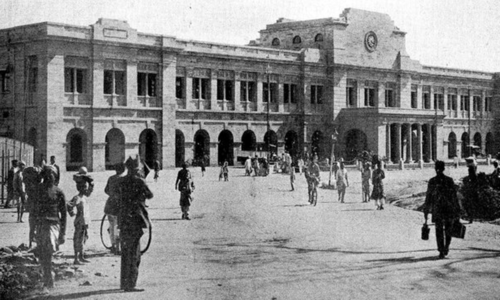
Right above one of Nagpur’s busiest shopping areas sits a fort that most residents have walked past many times but few have been inside. Sitabuldi Fort is where the 1817 Battle of Sitabuldi was fought, a turning point in the city’s history. Today it is a defence-controlled site with limited public access. This guide covers the fort’s history, the stories that are disputed, and what to check before you try to visit.
Where Is Sitabuldi Fort?
The fort stands on high ground in the middle of Nagpur. The Nagpur district administration describes it as atop a small hillock, while Incredible India describes it as perched on two hillocks in central Nagpur. The area around the hill is now called Sitabuldi, an important commercial hub. Incredible India notes that Nagpur Railway Station lies to the south and the Tekdi Ganapati temple sits behind the fort.
Incredible India also says Nagpur town is built around Sitabuldi Fort, which gives a sense of how central this hill has been to the city’s story.
The 1817 Battle of Sitabuldi
Sitabuldi is best known as the site of the Battle of Sitabuldi in 1817, fought during the Third Anglo-Maratha War between the forces of the Bhonsle ruler of Nagpur and the British East India Company. Both the district administration and Maharashtra’s Department of Tourism identify the fort as the site of this battle.
Maharashtra Tourism describes the battle as a major turning point: the East India Company took control after it, bringing Bhonsle power in Nagpur to an end in practice. Under British administration, Nagpur later became the capital of the Central Provinces and Berar. Many of the colonial buildings in the west of the city date from that era.
Incredible India adds that the fort also stands as a memorial to the soldiers who lost their lives in the battle. The district administration notes that graves of numerous British soldiers can be found inside.
Who Built the Fort? Two Accounts
Sources do not agree on this, and we think it is worth being honest about that.
- The district account: the Nagpur district administration says the fort was built by Appa Sahib, or Mudhoji II Bhonsle, of the Kingdom of Nagpur, just before he fought against the British East India Company.
- The Incredible India account: Incredible India calls that a misconception. It says research shows the fort structure was built by the British government in 1822, during the time of Richard Jenkins, by a committee formed for the purpose, using black stone from the Katol area.
Both accounts agree that the hill was the scene of the 1817 battle. The difference is about when and by whom the fortifications you see today were built. Until there is a clearer public record, we treat the builder and date of the present structure as disputed.
Other Stories Linked to the Fort
- The 1857 executions: Incredible India records that during the 1857 rebellion against the British, Nawab Kadar Ali, a descendant of Tipu Sultan, and eight associates were hanged by the fort’s ramparts. The district administration mentions the mausoleum of Nawab Kadar Ali near the eastern boundary wall. This is a separate, later event from the 1817 battle.
- The Gandhi cell: the district administration says the fort has a cell where Mahatma Gandhi was imprisoned. Incredible India disputes this, saying the claim that he was held here in April and May 1923 is inaccurate because he was in Yerwada at the time. We treat this story as unconfirmed.
- The royal visit: Incredible India says King George V and Queen Mary held an audience with the people of Nagpur from the fort during their visit to British India, and that a pillar inside commemorates the event.
Who Controls the Fort Today?
Sitabuldi Fort is not an ordinary public monument. The district administration says it is home to an office of the Territorial Army. Incredible India says it formerly housed the 118 Infantry Battalion (Territorial Army) Grenadiers and is now operated and maintained by defence officials.
That is why access is restricted and why normal sightseeing rules do not apply.
Can You Visit Sitabuldi Fort?
Usually, not on an ordinary day. The district administration says the fort opens to the general public only on two national holidays: 26 January (Republic Day) and 15 August (Independence Day). Incredible India similarly says it is not open to the public but welcomes visitors on special occasions such as Independence Day and Republic Day.
Some listings online show daily opening times. Because the fort is defence-controlled and the official district page describes access only on those two days, do not rely on any general timetable. Before you go:
- Check that access is actually open. Look for an official announcement or local news close to 26 January or 15 August, as arrangements can change year to year.
- Carry valid photo ID. Defence sites may ask for it at entry.
- Follow security instructions. Expect checks, and follow any rules on bags, phones and photography. Do not photograph restricted areas or personnel.
- Expect crowds. On open days, many residents use the rare chance to go in, so arrive early and be patient.
- Wear comfortable shoes. The fort is on high ground, and walking up and around it involves slopes and uneven surfaces.
What You Can Do on Other Days
Even when the fort is closed, the Sitabuldi area is worth a visit.
- Tekdi Ganapati temple: the district administration lists the Ganesha temple at the back of the hillock as a nearby attraction.
- Sitabuldi market: Incredible India recommends the bustling markets of Sitabuldi Main Road for local handicrafts, textiles and oranges.
- View the fort from outside: you can see the hill and its walls from the surrounding roads. Do not try to enter restricted areas.
Why Sitabuldi Matters
Sitabuldi is where Nagpur’s Maratha era gave way to British rule, and its story connects 1817, 1857 and the city’s colonial growth. Some of its stories are still debated, which makes it a good reminder to read local history carefully. If you get the chance to go in on Republic Day or Independence Day, take it.
For more of the city’s past, read our story on Nagpur’s rich history and our guide to Deekshabhoomi on nagpurified.com.
Sources and Planning Note
- Nagpur district administration: Historical Places, including Sitabuldi Fort
- Incredible India: Sitabuldi Fort
- Maharashtra Department of Tourism: Nagpur
Sources checked 9 November 2026. The 1817 battle, the Territorial Army office, the 26 January and 15 August public access, the British graves, the mausoleum of Nawab Kadar Ali and the Tekdi Ganapati temple are from the Nagpur district administration. The 1822 construction account, the 1857 executions, the dispute over the Gandhi cell and the royal visit are from Incredible India. The battle’s place in Nagpur’s history is from Maharashtra’s Department of Tourism. Where sources disagree, we say so. We have not published a daily opening schedule because the fort is defence-controlled and access is restricted.
Frequently Asked Questions
When was the Battle of Sitabuldi fought?
The Battle of Sitabuldi was fought in 1817, during the Third Anglo-Maratha War, between the Bhonsle ruler of Nagpur and the British East India Company.
Who built Sitabuldi Fort?
Sources differ. The Nagpur district administration credits Appa Sahib, or Mudhoji II Bhonsle, while Incredible India says the present fort was built by the British in 1822. We treat this as disputed.
Is Sitabuldi Fort open to the public?
Not on ordinary days. The district administration says the fort opens to the general public only on 26 January and 15 August. Confirm arrangements close to the date.
Who controls Sitabuldi Fort today?
The fort is defence-controlled. The district administration says it houses an office of the Territorial Army, and Incredible India says it is maintained by defence officials.
Was Mahatma Gandhi imprisoned at Sitabuldi Fort?
This is disputed. The district page mentions a cell linked to Gandhi, but Incredible India says the claim of his imprisonment there in 1923 is inaccurate.
What happened at Sitabuldi Fort in 1857?
According to Incredible India, Nawab Kadar Ali, a descendant of Tipu Sultan, and eight associates were hanged by the fort’s ramparts during the 1857 rebellion.
What should I carry when visiting Sitabuldi Fort?
Carry valid photo ID, wear comfortable shoes and follow all security instructions, including any rules on bags, phones and photography.
What is near Sitabuldi Fort?
The Tekdi Ganapati temple sits behind the hill, and the Sitabuldi market area around it is one of Nagpur’s busiest shopping hubs.
Related Posts